Outdoor Roller Skating: How to Take Your Skating From the Rink to the Streets and Trails
Quick Answer: Taking your skating outdoors means swapping in softer wheels for rough pavement, starting on smooth flat paths before tackling cracks and hills, mastering confident stopping before you need it in traffic, and wearing full protective gear every time. The surfaces, wheels, and hazards are genuinely different from the rink — the freedom is real, but so is the extra prep it takes to get there safely.
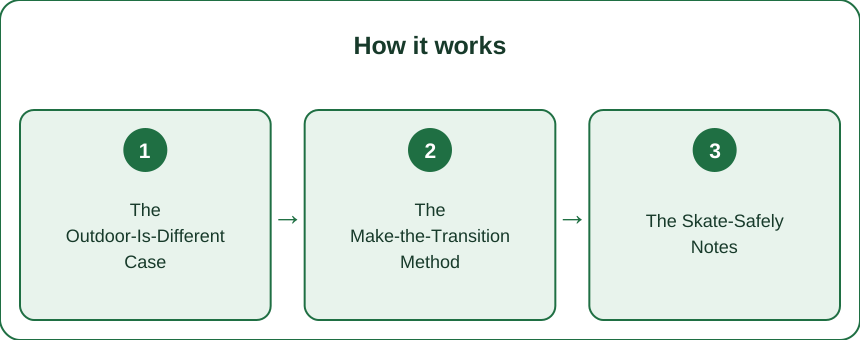
Skating outdoors — on trails, paths, and streets — is a whole different, more freeing experience than the rink, but the surfaces, wheels, and hazards are different too. Here’s the guide: why outdoor skating is genuinely different, how to make the transition, and how to skate safely once you’re out there.

Why Is Outdoor Skating So Different From Rink Skating?
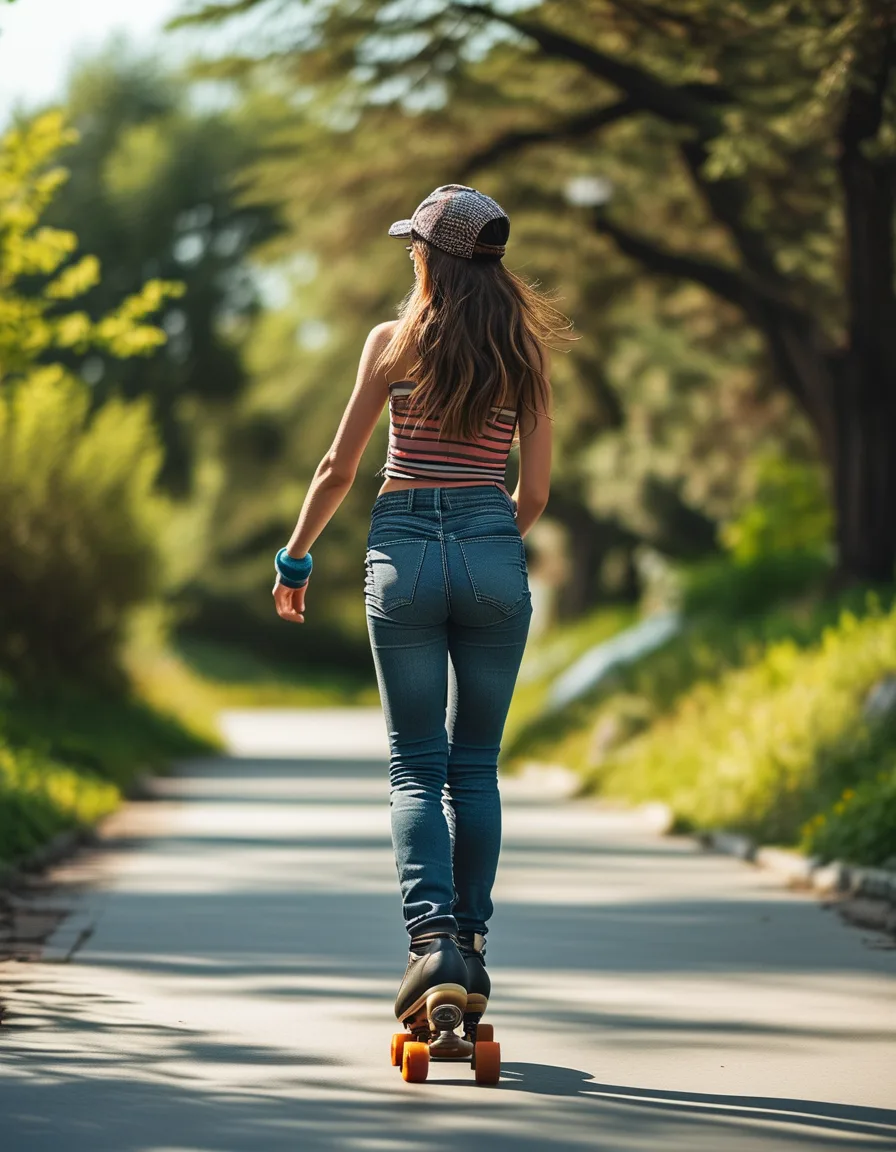
The rink is smooth, flat, and predictable — outdoor surfaces are none of those things. Cracked pavement, gravel, and uneven joints replace a polished floor, which means your wheels, your stopping technique, and your general awareness all need to adjust. Outdoor conditions also call for softer wheels than rink wheels, since a harder wheel that glides beautifully indoors transmits every bump and crack straight into your legs outside. On top of the rougher ground, outdoor skating adds real hazards a rink never has — traffic, hills, pedestrians, and debris — alongside a kind of open-air freedom that a rink, for all its smoothness, simply can’t offer. It’s a genuinely different sport wearing the same skates.
How Do I Make the Transition From Rink to Outdoor Skating?
A few steps, roughly in order:
- Switch to softer outdoor wheels. They absorb rough surfaces the way rink wheels never had to.
- Start on smooth, flat paths before anything rougher — a bike path or a quiet, freshly paved stretch is the right first outing, not a gravel trail.
- Master confident stopping before anything else. Stopping reliably matters far more outdoors than it does at the rink, where the walls and slower pace forgive a shaky stop.
- Work up to rougher surfaces and hills gradually. Both demand more control than flat, smooth ground, so build up to them rather than treating your first outdoor session as the test.
- Build outdoor confidence in stages rather than assuming rink skill transfers one-to-one — it mostly does, but the margin for error outdoors is smaller.
- Wear real protective gear. A helmet, wrist guards, and pads matter more outside than at a rink, where falls happen on a forgiving floor instead of asphalt.
- Learn basic trail etiquette — passing, signaling, and sharing space with walkers, cyclists, and other skaters — since outdoor paths are shared spaces in a way a rink rarely is.
What Should I Actually Watch for to Skate Safely Outdoors?
Safety outdoors comes down to a handful of habits, repeated every session:
- Wear the full kit — helmet, wrist guards, and pads — every time, not just on days that feel riskier.
- Keep your stopping technique sharp, since a reliable stop is your main defense against traffic, pedestrians, and sudden obstacles.
- Know how to fall safely if a stop doesn’t work in time; a controlled fall causes far less damage than an instinctive, unprepared one.
- Scan continuously for hazards — cracks, debris, curbs, and vehicles — rather than looking only a few feet ahead of your wheels.
- Follow trail etiquette and stay aware of everyone else sharing the path with you.
- Keep your skates maintained for outdoor use specifically, since rougher terrain wears wheels and bearings faster than a rink floor does.
- Remember why you’re doing this — skating is genuinely good exercise, and the safety habits above are what let you keep doing it consistently instead of sidelined by an avoidable injury.
Myth vs. Fact: Outdoor Roller Skating
- Myth: Rink wheels work fine outdoors if you’re careful. Fact: Softer, outdoor-specific wheels absorb rough terrain in a way rink wheels physically can’t — this is a hardware difference, not just a caution.
- Myth: If you can stop confidently at the rink, you’re ready for outdoor traffic and hills. Fact: Outdoor stopping needs to be more reliable and faster-reacting, since the consequences of a missed stop are higher on a street than on a rink floor.
- Myth: Protective gear is mostly for beginners. Fact: Gear matters at every skill level outdoors — hazards like debris and traffic don’t discriminate by experience, and a fall on asphalt is a fall on asphalt.
- Myth: Outdoor and rink skating are basically the same skill. Fact: Most of the core skill transfers, but the surface, hazard awareness, and gear needs are different enough that treating them as identical is how outdoor injuries happen.
Outdoor Roller Skating FAQ
Do I need special wheels to skate outdoors?
Yes — softer outdoor wheels are strongly recommended, since they absorb the roughness of pavement and trails in a way rink wheels aren’t built to handle. Skating outside on rink wheels transmits more shock and wears the wheels down faster.
Is outdoor skating more dangerous than rink skating?
It carries more variables — traffic, hills, uneven surfaces — which is why gear, stopping skill, and hazard awareness matter more outdoors. With the right preparation, it’s not inherently more dangerous, just less forgiving of skipped preparation.
What’s the single most important skill to master before skating outdoors?
Confident, reliable stopping. It’s the skill most rink skaters underdevelop, precisely because a rink’s slower pace and soft walls rarely force you to rely on it the way outdoor traffic and hills do.
Bottom Line
Skating outdoors — on trails, paths, and streets — is a whole different, more freeing experience than the rink, but the surfaces, wheels, and hazards are different too. Make the transition: switch to softer outdoor wheels, start on smooth flat paths, master confident stopping, and handle rougher surfaces and hills gradually, building confidence as you go. Skate safely — wear protective gear, stop reliably, know how to fall safely, scan for hazards, follow trail etiquette, and maintain your skates. That’s how you take your skating from the rink to the streets and trails.
TL;DR:
- Outdoor surfaces, wheels, and hazards are all genuinely different from the rink
- Switch to softer outdoor wheels and start on smooth, flat paths first
- Master confident stopping before tackling hills or rougher terrain
- Wear a helmet, wrist guards, and pads every session, not just when it feels risky
- Learn trail etiquette — outdoor paths are shared spaces in a way a rink isn’t
Keep Reading
This article is for general informational and styling purposes only. Fit, sizing, and product availability may vary.