Why Learning to Fall Is the Fastest Way to Stop Falling
Quick Answer: Falling practice works on both ends of the problem at once: it teaches your body a safe automatic landing shape — low, rounded, onto padded surfaces, never onto outstretched hands — and it deletes the fear that makes you skate stiff, tall, and top-heavy, which is the posture that causes most beginner falls in the first place. Twenty minutes of deliberate practice on grass or a mat, in full pads, converts falling from a catastrophe into a technique — and skaters who own the technique relax, bend, and stop needing it nearly as often.
Here is the fear-stiffness loop, the falling technique itself, and the practice session that installs it.
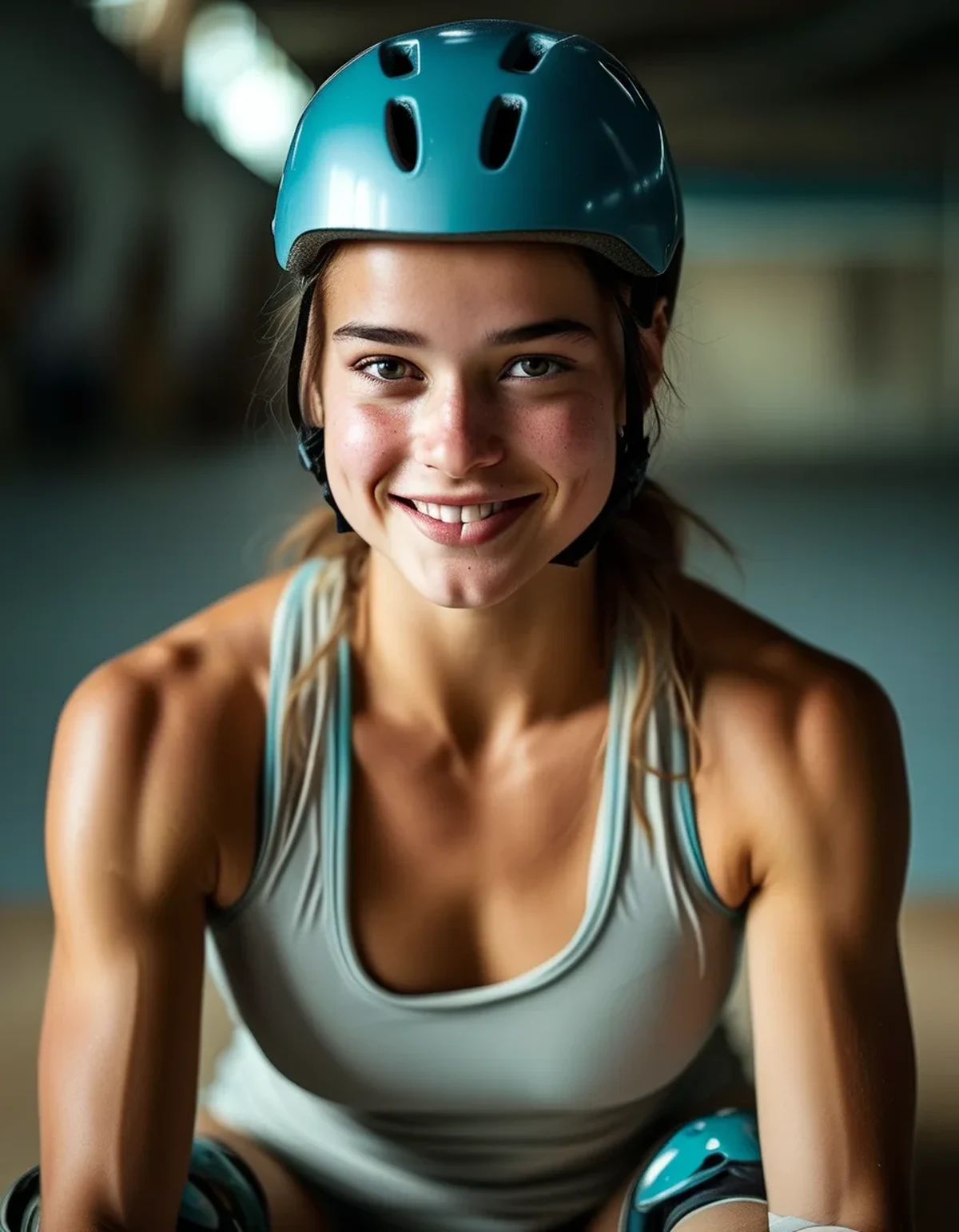
How does fear of falling cause the falls?
Through posture. Fear has a shape, and the shape is unskateable.
A frightened beginner stands tall and locks up: straight knees, rigid ankles, weight drifting back toward the heels, arms out like a tightrope walker, every muscle braced. Each of those is individually destabilizing, and fear deals them as a package.
Straight knees remove your suspension. Skating balance lives in bent knees and hips — the crouch is what absorbs every pebble, seam, and wobble. A locked leg transmits every disturbance straight to your center of mass, un-shock-absorbed. The stiff skater is riding without springs.
Weight-back is the classic beginner fall pre-loaded. Leaning away from the direction of travel feels safer and puts your mass behind your wheels, where the backward slip — the hardest fall to catch — lives. Confident skaters carry their nose over their knees; frightened ones lean back from the future.
Bracing kills the corrections. Balance is thousands of tiny automatic adjustments per minute — ankles and hips constantly editing. Co-contracted, braced muscles cannot make small fast edits; they can only make big late ones. The stiff skater wobbles less often but bigger, and big late corrections are how small wobbles become falls.
So the loop closes: fear makes you stiff, stiffness makes you fall, falling confirms the fear. Falling practice is the only intervention that attacks the loop at its source — once your body has a rehearsed, boring answer to what if I go down, the bracing loses its job. Skaters routinely describe the same before-and-after: the session where falling became a technique is the session skating became fun. Not because they got braver — because their knees finally bent.
What does safe falling actually look like?
Four rules, one shape, all trainable. The goal is landing on padding — yours and your gear’s — with the shortest possible drop.
Rule one: get low first. Distance is damage — a fall from a deep crouch is a controlled sit; a fall from full height is an event. The moment anything feels wrong, drop into your knees. Half the technique of falling well is starting the fall from six inches off the ground, and the crouch instinct doubles as the posture that prevents the fall anyway. One habit, both benefits.
Rule two: never catch yourself on straight arms. The instinct to shoot both hands out — straight-armed, palms first — is the wrist-injury delivery mechanism, the single most common way skaters get hurt. Wrist guards exist because this reflex is nearly unbeatable by willpower alone — which is exactly why the replacement reflex has to be trained, not intended.
Rule three: aim for the padded real estate. Forward falls go to knee pads first — one knee, then both, sliding — with hands touching down last and soft, guards taking the skid. Sideways falls roll onto the outer thigh, hip, and seat — the body’s built-in crash pad — with the arm folding in, not reaching out. Backward falls, the scary ones: chin tucked hard to chest, seat first, rounding onto the back — never a straight arm behind you, never the tailbone if rounding can spread it.
Rule four: round and go with it. Rigid falls concentrate force at one landing point; rounded, relaxed falls spread it across a curve. The tuck-and-round shape you rehearse is what turns a fall into a slide — small, low, distributed, boring.
Gear makes every rule easier: knee pads you genuinely trust change your willingness to kneel, wrist guards forgive the reflex you have not fully replaced yet, and clothes with coverage earn their place — leggings over bare legs is the difference between a slide mark on fabric and one on skin, which is why the roller-rink uniform of biker shorts over opaque tights or full-length leggings is practical engineering wearing a cute outfit.
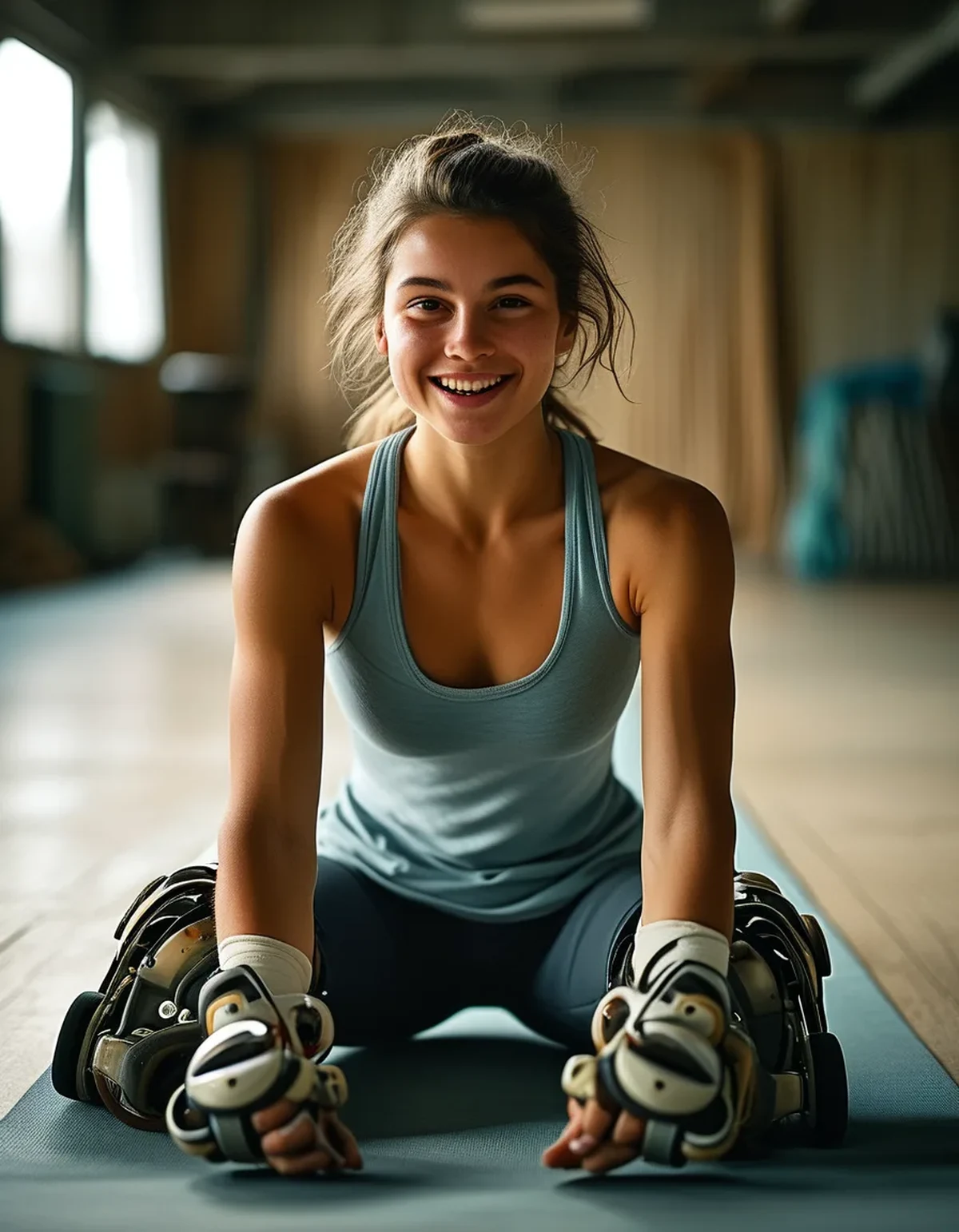
What Nobody Tells You About Falling
Every experienced skater still falls — they just fall well. The fantasy that skill eliminates falling keeps beginners ashamed of the wrong metric. The real progression is falls becoming smaller, lower, softer, and rarer — watch a rink regular go down: knee slide, up, skating again inside three seconds. That is the skill, and it was practiced.
Your first practiced fall retires years of imagined ones. The catastrophe your brain has been simulating is almost always worse than the padded kneel you actually perform. One deliberate session replaces the imagined fall with a remembered one, and remembered beats imagined for calming a nervous system every time.
Getting up is half the syllabus. The stand-up — one knee up, both hands on that knee, push to standing over your wheels — deserves as many reps as the fall. Skaters who cannot get up gracefully dread falling for social reasons as much as physical ones, and the drilled recovery deletes both.
Fatigue is when falls cluster. Late-session legs stop holding the crouch, posture drifts tall, and the stiffness loop reopens through tiredness instead of fear. The last twenty minutes of a long skate produces a disproportionate share of falls — ending one lap before empty is a falling technique.
Surface-check like it is gear. Sand, gravel, wet leaves, and that one lifted sidewalk seam cause more beginner falls than any balance deficit. A thirty-second scan of a new surface — and a habit of reading the ground a car-length ahead — is invisible, unglamorous fall prevention.
Padded shorts exist and nobody regrets them. For anyone whose fear centers on the backward tailbone fall, impact shorts under leggings quietly remove the scariest item from the imagination list — beginners, park skaters, and returning adults all use them more than the rink lets on.
What does a falling practice session look like?
Twenty minutes, full pads, soft surface — grass, a gym mat, or thick carpet. Skates on for the full version; first-timers can run rounds one and two in shoes.
Round one: kneels, from static. Standing still in a deep crouch, lower to one knee pad, then both, hands touching last. Up through the drilled stand — knee, hands on knee, rise. Ten repetitions until it is boring. Boring is the goal; boring is what your body reaches for under pressure.
Round two: sits and side-rolls. From the crouch, sit down and back onto one seat cheek, rounding onto the outer thigh and hip, arm folding across the body. Then the backward version: chin tucked, seat first, rolling small onto the rounded back. Slow, padded, deliberate — this is the round that deletes the backward-fall fear specifically, because the scary one becomes the rehearsed one.
Round three: kneels from slow motion. On grass or matting, roll at walking pace and execute the knee slide — drop low, one knee, both, slide, stand, resume. Five to ten reps. Moving falls feel different from static ones; this round bridges the gap while the stakes stay near zero.
Round four: the crouch that prevents it all. Finish with two minutes of skating posture drills — deep crouch holds, nose over knees, hands on knees, small weight shifts. You are wiring the low, soft, forward shape as the default so the falling technique becomes the backup plan it should be.
Then re-run round one for five minutes at the start of your next few sessions. The reflex consolidates through spaced repetition — three short refreshers beat one long ceremony, and within a couple of weeks the kneel is what your body offers before your brain is consulted.
This is general information, not medical advice — anyone with osteoporosis, prior wrist or tailbone injuries, or conditions affecting balance should shape falling practice with a physical therapist first, and any fall producing real pain, swelling, or a hit to the head is a stop-and-get-checked event, practiced technique or not.
The payoff is the loop running backward: rehearsed falls make a relaxed skater, relaxed skaters bend, and bent knees quietly cancel most of the falls you were bracing against.
FAQ: Falling and Fear Questions, Answered
I am terrified of the backward fall specifically. Where do I start?
With round two on the softest surface you own, plus two purchases: impact shorts and the chin-tuck habit. Rehearse the tucked, seat-first, rounded version ten times slow — the backward fall loses most of its power the day it stops being unrehearsed. And keep your crouch forward; backward falls mostly visit skaters leaning back.
Are wrist guards really necessary if I learn to fall correctly?
Yes, for years — the straight-arm catch reflex fades with training but resurfaces in surprises, and surprises are what falls are. Guards plus technique is the adult answer: technique for the falls you manage, guards for the one that manages you.
How do I practice if I skate outdoors and there is no grass nearby?
A yoga mat doubled on carpet handles rounds one and two at home in shoes or skates; the moving round can wait for a patch of grass, a rubberized track, or the rink’s carpeted lobby corner during quiet hours. Rinks are generally friendly to falling practice — ask, and you will usually get a corner and a knowing nod.
Does falling practice apply to skateboards and bikes too?
The principles transfer almost whole — low beats tall, round beats rigid, padded real estate beats outstretched hands, rehearsed beats imagined. The specific shapes differ by sport and speed, but the core purchase is identical: a trained answer to going down that frees you to relax while staying up.
TL;DR:
- Fear skates stiff — locked knees, weight back, braced muscles — and stiff is the posture that actually causes beginner falls; falling practice breaks the loop at the source.
- The technique: get low first, never catch on straight arms, land on padded real estate — knee pads forward, hip and seat sideways, tucked and rounded backward.
- Train it deliberately: twenty minutes on grass or mats in full pads — static kneels, sits and rolls, slow-motion knee slides, then crouch posture — with short refreshers the next few sessions.
- Gear underwrites the courage: trusted knee pads, wrist guards for the stubborn reflex, coverage over bare skin, and impact shorts for the backward-fall imagination.
This week, spend one twenty-minute session making falling boring. The skater who stands up smiling from a practiced kneel is the one whose knees finally unlock — and whose falls mostly stop arriving.
See It in Motion
Seen here: High Waist Embossed Yoga Leggings with Side Pockets — shop it on bubblelime.com
Keep Reading
This article is for general informational and styling purposes only. Fit, sizing, and product availability may vary.