The Common Roller Skating Knee Pad Mistake That Only Shows Up When You Actually Fall
Quick Answer: Knee pads worn too loose shift out of position during an actual fall — exactly when protection matters most — because the padding needs to stay centered over the kneecap on impact, and a loose pad that’s comfortable while standing still often slides during the fast, unpredictable motion of a real fall.

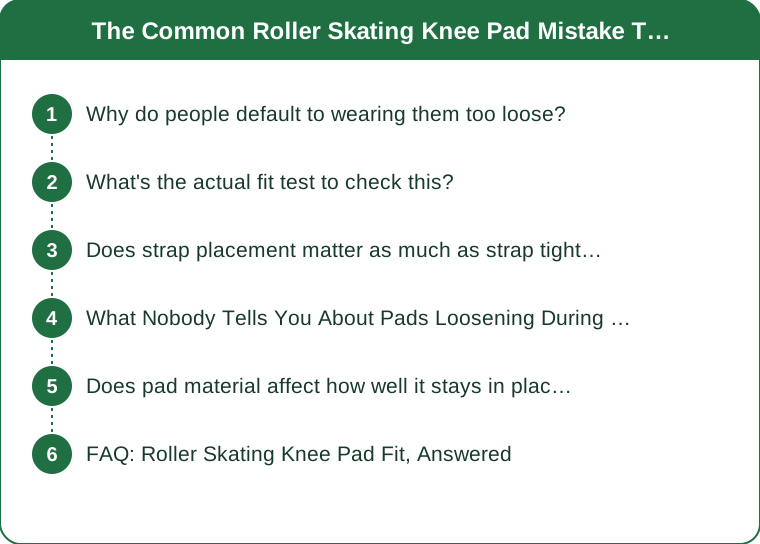
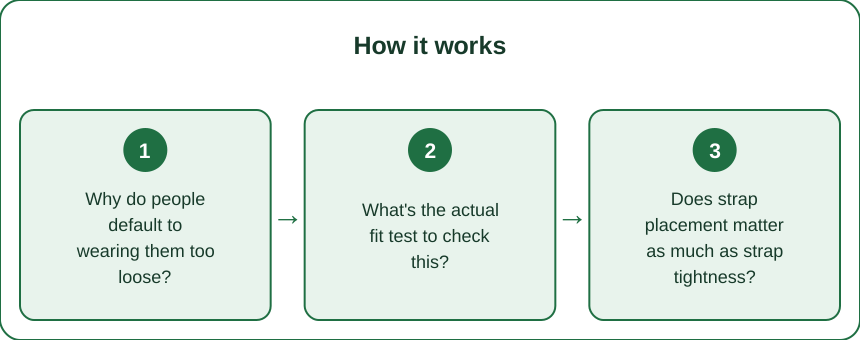
Why do people default to wearing them too loose?
A snug knee pad feels more restrictive and less comfortable during normal skating movement, so there’s a natural tendency to loosen straps for comfort — but that same looseness is exactly what allows the pad to shift out of protective position during a sudden fall.
What’s the actual fit test to check this?
A properly fitted knee pad shouldn’t slide down or rotate when you shake your leg vigorously or do a few practice drops onto the knee in a controlled setting — if it shifts noticeably during that test, it’s too loose for the fast, unpredictable motion of a real fall.
Does strap placement matter as much as strap tightness?
Yes — straps positioned too high or too low relative to the kneecap cause the pad to sit incorrectly even if tightened enough, so checking that the hard cap or padded center sits directly over the kneecap, not above or below it, matters as much as overall tightness.

What Nobody Tells You About Pads Loosening During a Session
Straps genuinely loosen gradually during an active skating session from movement and sweat, so a pad that fit correctly at the start of a session can be meaningfully looser an hour in — periodically rechecking and retightening during longer sessions is a good habit, not an overreaction.
Does pad material affect how well it stays in place, separate from strap tightness?
Yes — pads with a contoured, articulated design that follows knee movement tend to stay in place better than flatter, more rigid designs, even at similar strap tightness, since the shape itself resists sliding during bent-knee motion.
FAQ: Roller Skating Knee Pad Fit, Answered
Is ‘too tight’ also a real risk, or is looser always safer to err toward?
Too tight restricts circulation and knee movement, which is its own problem — the goal is genuinely snug and centered, not maximally tight.
Should knee pads feel slightly uncomfortable when correctly fitted?
A correctly fitted pad should feel secure and snug but not painfully restrictive — noticeable discomfort usually means it’s actually too tight, not correctly fitted.
Do beginners need different knee pad fit than more experienced skaters?
The fit principles are the same regardless of skill level, though beginners fall more frequently while learning, making correct fit arguably even more important early on.
TL;DR:
- Loose knee pads shift out of protective position during the fast motion of an actual fall
- A shake-and-drop test reveals whether a pad is actually secure enough
- Strap placement relative to the kneecap matters as much as overall tightness
- Pads loosen gradually during a session and are worth rechecking periodically
Comfort standing still isn’t the right test — the pad needs to stay in place during the one moment it actually has to work.
Keep Reading
This article is for general informational and styling purposes only. Fit, sizing, and product availability may vary.