Skate Maintenance: The Bearings, Wheels and Checks That Keep You Rolling Safe
Quick Answer: Skates need real maintenance because bearings grind, wheels wear unevenly (“coning”), and hardware loosens — all of which affect both how easily you glide and how safely you skate. About twenty minutes a month covers it: a thirty-second pre-skate check every session, a wheel rotation monthly, and a bearing clean-and-lube seasonally or right after a wet ride.
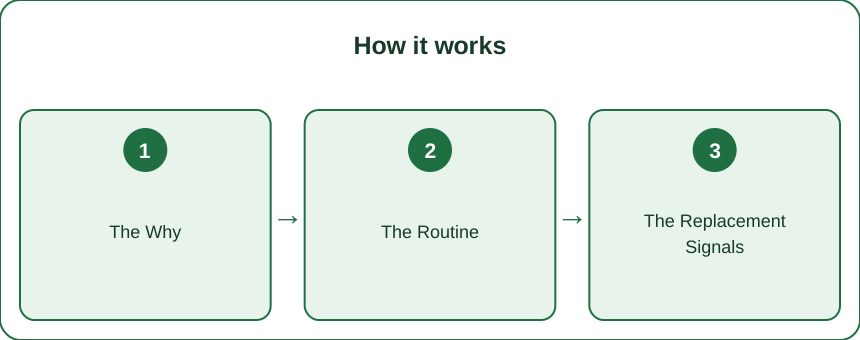
Skates are vehicles, and vehicles need maintenance — the bearings that grind, the wheels that cone, the nuts that loosen — and twenty monthly minutes keeps the ride smooth and the skater safe. Here’s the maintenance guide: why it matters, the routine broken down by part, and the signals that tell you when something needs replacing.

Why Does Skate Maintenance Actually Matter?
Clean bearings and fresh wheels make skating genuinely easier — the effort per glide drops noticeably, and skates that feel sluggish are very often just dirty skates rather than worn-out ones. There’s a real safety stake too: a loose wheel nut or a seized bearing are both crash mechanisms, which is exactly why a quick pre-skate check matters as much as the deeper monthly routine. There’s a money angle as well — well-maintained skates last years longer, since bearings that get cleaned instead of replaced and wheels that get rotated instead of worn unevenly both stretch your gear budget considerably. And there’s a confidence dividend: a skater who understands her own equipment trusts it more, and that trust translates directly into smoother, more confident skating.

What Does the Actual Maintenance Routine Look Like, Part by Part?
- The pre-skate check — a thirty-second ritual before every session: wiggle-test the wheel nuts, check toe-stop tightness, and scan laces and straps. Make this an every-session habit, not an occasional one.
- Wheel rotation — swap wheels monthly. They wear unevenly by position and stride, the same way tires do, so rotating them (crossing sides and positions) extends the life of the whole set instead of retiring one worn wheel early while the others still have plenty of life left.
- Bearing care — a clean-and-lube cycle on a seasonal schedule, or sooner if they start feeling gritty. Bearings get popped out, wiped down, given a solvent bath, dried fully, and re-lubed with a drop of bearing oil. Rain or sand sessions demand immediate attention — water is bearing death, and the shields need careful handling during cleaning so they go back on correctly.
- Boot and plate checks — make sure mounting bolts stay snug, eyeball the plate for trueness, and keep an eye on the boot’s stitching and sole for early wear.
- Toe-stop management — respect the wear line. Rotate or replace a toe stop before it’s fully gone, since the stop is your primary braking system and isn’t a place to cut it close.
- The basic kit — a skate tool, some rags, bearing lube, and a solvent jar cover nearly everything above. It’s roughly a twenty-dollar kit that pays for itself within the first bearing clean you’d otherwise have paid a shop for.
How Do I Know When a Part Actually Needs Replacing?
- Wheels show it through coning — wheels worn at an angle from repeated stride pressure. Rotation delays this, and eventual replacement resolves it; replacement is also a natural moment to reconsider hardness and size if your needs have changed.
- Bearings are done when they still grind after a proper cleaning. The spin test is simple: free and quiet is the standard. Replace bearings individually if only one is bad, or upgrade the whole set if your budget allows and you’re due anyway.
- Toe stops should be replaced right at the wear-line indicator — they’re cheap enough, and critical enough, that there’s no good reason to push past that point.
- Laces and hardware — fraying laces should be replaced before they snap mid-stride, not after. Cushions and bushings are worth checking annually if you skate frequently.
- The boot itself — broken-down support or a separated sole are real retirement signals, though a beloved boot on quality skates can often be resoled rather than fully replaced.
- When in doubt, get a shop tune-up. An annual once-over from a skate shop is a reasonable option if you’re unsure about any of the above, and it doubles as a chance to learn more about your own equipment if you’re willing to ask questions while they work.
What Nobody Tells You About Skate Maintenance
- A “slow” skate is usually a dirty one, not a broken one. Before assuming you need new bearings or wheels, try a basic clean — it resolves more sluggishness than people expect.
- Maintenance is its own small hobby, not just a chore. A tinker hour with a podcast, cleaning bearings and checking hardware, is genuinely enjoyable once it stops feeling like an obligation.
- Skates that roll true reward every single session, not just the big ones — the twenty minutes a month pays off every time you skate, not just on the days something might have gone wrong.
- Rain is the fastest way to ruin bearings. If you get caught in wet conditions, clean and dry your bearings that same day rather than waiting for your regular seasonal schedule.
Skate Maintenance FAQ
How often should I actually clean my bearings?
Seasonally is the standard baseline, but clean them immediately after any wet or sandy session — water and grit degrade bearings far faster than normal use does, and waiting for the seasonal schedule after a rainy skate risks real damage.
How do I know if my wheels need rotating instead of replacing?
If they show early coning (an angled wear pattern) but still spin true and hold their shape, rotation is enough. Replacement is only necessary once the wear is severe or a wheel has actually cracked or flat-spotted.
What’s the cheapest way to keep my skates maintained?
A basic twenty-dollar kit — a skate tool, rags, bearing lube, and a solvent jar — covers the pre-skate check, wheel rotation, and bearing cleaning yourself, which is far cheaper over a year than paying a shop for each of those services individually.
Bottom Line
Twenty monthly minutes covers it: a thirty-second pre-skate nut-and-stop check every session, wheel rotation monthly (they cone like tires), and bearings cleaned and lubed seasonally or immediately after rain. Grinding after cleaning means a bearing is done; replace toe stops at the wear line and laces before they snap.
TL;DR:
- Clean bearings and rotated wheels make skating noticeably easier, not just longer-lasting
- Do a thirty-second nut-and-stop check before every session
- Rotate wheels monthly and clean bearings seasonally — sooner after rain or sand
- A bearing that still grinds after cleaning needs replacing; a toe stop needs replacing at its wear line
- A basic twenty-dollar kit covers nearly all of this maintenance yourself
Keep Reading
This article is for general informational and styling purposes only. Fit, sizing, and product availability may vary.