Roller Skate Wheel Hardness: Why the Number on the Wheel Actually Matters
Quick Answer: Wheel hardness (durometer) controls grip and rolling speed — softer wheels (78A-88A) grip better outdoors and on rough surfaces, harder wheels (92A-103A) roll faster and last longer indoors on smooth rinks. Wrong hardness for your surface makes skating feel unstable or exhausting.
You assumed your skates just came with ‘the wheels’ and never questioned it. But that small number stamped on the side — 82A, 95A, whatever it says — is quietly deciding how much effort every session takes.

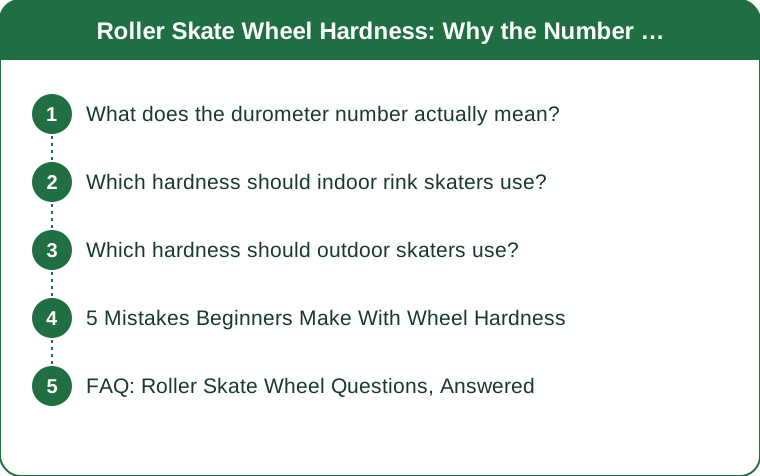
What does the durometer number actually mean?
The number measures hardness on the A scale, where lower numbers are softer rubber and higher numbers are harder plastic-like wheels. Softer wheels flex more and grip the surface, absorbing small cracks and debris; harder wheels barely flex and roll with less friction on smooth surfaces.
This single number affects grip, speed, comfort, and how much vibration travels up into your ankles and knees on a rough surface.
Which hardness should indoor rink skaters use?
Indoor rinks are smooth and consistent, so harder wheels (92A-103A) roll faster and last longer without the extra grip softer wheels would add unnecessarily. Using soft outdoor wheels indoors makes skating feel sluggish and wears them down faster than needed.
Most rink rental skates default to a middle hardness that works reasonably for everyone, which is part of why rental skates often feel harder to control than skates fitted to your actual skating surface.

Which hardness should outdoor skaters use?
Outdoor surfaces — sidewalks, trails, driveways — have cracks, pebbles, and texture that softer wheels (78A-88A) absorb, giving grip and a smoother ride over imperfections. Hard wheels outdoors transmit every bump straight into your joints and can slide unexpectedly on debris.
If you skate both indoors and outdoors regularly, a second wheel set is a more realistic fix than trying to compromise on one hardness for both.
5 Mistakes Beginners Make With Wheel Hardness
- Never checking the durometer number and assuming all wheels are the same.
- Using outdoor-soft wheels indoors, which feels sluggish and wears out fast.
- Using hard rink wheels outdoors, which feels unstable on rough pavement.
- Blaming balance or technique for what’s actually a wheel mismatch.
- Buying wheels by looks or color instead of checking the A rating for their actual surface.
FAQ: Roller Skate Wheel Questions, Answered
What hardness is best for a beginner who skates both indoors and outdoors?
A mid-range hardness around 88A-92A is a reasonable single-set compromise, though dedicated sets for each surface will always perform better.
Do softer wheels wear out faster?
Yes, generally — softer rubber grips more but also abrades faster, especially on rough outdoor surfaces.
Does wheel size matter as much as hardness?
Both matter, but hardness affects surface-specific comfort and grip more directly than size, which mainly affects speed and maneuverability.
TL;DR:
- The durometer (A) number controls grip, speed, and vibration absorption
- Harder wheels (92A+) suit smooth indoor rinks; softer wheels (78-88A) suit outdoor surfaces
- Using the wrong hardness for your surface is often mistaken for a balance or technique problem
- Dedicated indoor and outdoor wheel sets solve the tradeoff if you skate both
Check the number stamped on your current wheels against where you actually skate most — it might explain more than you’d expect.
Keep Reading
This article is for general informational and styling purposes only. Fit, sizing, and product availability may vary.