Quad Skates vs. Inline Skates: Which Should a Beginner Actually Start With?
Quick Answer: Quad skates are generally more stable and easier for absolute beginners because their wide wheel base resists side-to-side tipping, while inline skates roll faster and turn more naturally once you’ve built balance. For most beginners prioritizing confidence early, quads are the easier starting point.
Both look fun in videos, both promise the same ‘get fit while having fun’ pitch — but they teach your body completely different balance skills, and picking the wrong one first can make those early wobbly weeks a lot rockier than they need to be.

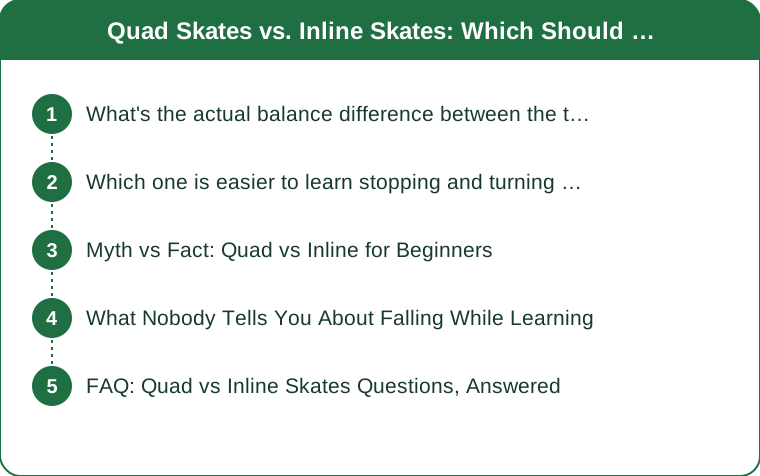
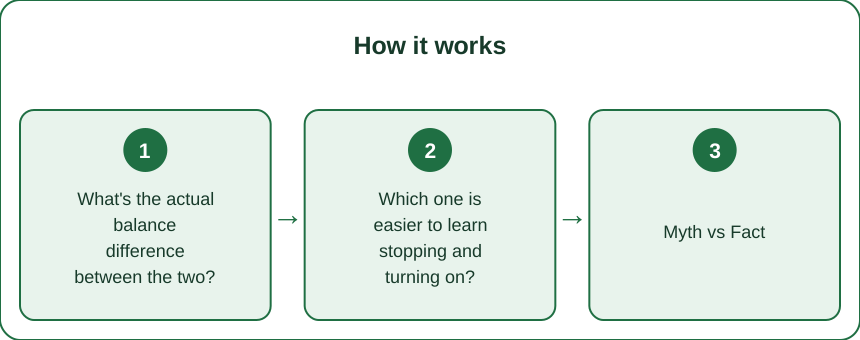
What’s the actual balance difference between the two?
Quad skates have two wheels side by side at the front and back, creating a wide base that resists tipping left or right — closer to how a chair’s four legs stay stable. Inline skates have wheels in a single line, which balances more like a bicycle: stable moving forward, but requiring active side-to-side balance at a standstill or slow speed.
For a first-time skater, that wide quad base means far fewer ‘catching yourself’ moments in the first few sessions.
Which one is easier to learn stopping and turning on?
Quads typically have a toe stop or heel brake that’s intuitive for beginners — plant it, lean slightly, stop. Inline stopping (usually a heel brake) requires a specific weight-shift technique that takes longer to feel natural, and many beginners default to running into grass or a wall instead in the first few weeks.
Turning favors inline once you’re comfortable — the single-line wheel setup carves smoother, faster turns — but that advantage doesn’t matter much until basic balance and stopping are solid.

Myth vs Fact: Quad vs Inline for Beginners
Myth: Inline skates are objectively ‘more advanced’ and quads are for kids. Fact: Both have dedicated adult communities and serious athletes — the difference is skill emphasis (agility and dance-style moves for quads, speed and distance for inline), not skill level.
Myth: If you skated as a kid, your old skill transfers directly regardless of type. Fact: Balance skills transfer partially, but if you learned quads as a kid and pick up inline as an adult (or vice versa), expect a real relearning period for the first few sessions.
Myth: Quads are only good for rinks, inline only for outdoor trails. Fact: Both work in both settings with the right wheel hardness — outdoor quad skating and rink inline sessions are both common, just less mainstream.
What Nobody Tells You About Falling While Learning
Here’s the detail beginners underestimate: how you’ll fall differs by skate type, and it affects what protective gear matters most. Quad falls tend to be backward, onto the tailbone — wrist guards and a padded seat area matter more. Inline falls, from the narrower base, more often go sideways onto hips or forward onto knees — knee pads become the priority piece.
Match your protective gear investment to your skate type, not a generic ‘skate safety’ list.
FAQ: Quad vs Inline Skates Questions, Answered
Can I switch from quads to inline later without starting over?
You’ll keep general balance and confidence, but expect a genuine adjustment period — a few sessions of feeling clumsy again before inline balance clicks.
Which is better for fitness and calorie burn?
Both are comparable for a moderate-pace session; inline tends to allow higher sustained speeds outdoors, which can push the intensity higher for experienced skaters specifically.
Do quad or inline skates fit differently?
Sizing runs similarly to shoes for both, but try them on in person if possible — fit tightness affects control more in skating than in almost any other footwear-based activity.
TL;DR:
- Quad skates’ wide wheelbase makes early balance and stopping easier for most beginners
- Inline skates roll faster and turn smoother once basic balance is solid
- Neither type is objectively more advanced — they emphasize different skills
- Match your protective gear to your skate type: quads fall backward, inline falls sideways/forward
If you’re picking your very first pair, start with quads for the easier learning curve, then consider inline once stopping and balance feel automatic.
Keep Reading
This article is for general informational and styling purposes only. Fit, sizing, and product availability may vary.