How to Set Up Your First Pair of Skates Without Overspending
Quick Answer: Spend on the boot, which decides comfort and control and is the hardest thing to upgrade later. Then spend on wheels appropriate to where you actually skate - outdoor skating needs softer wheels than most beginner packages include. Bearings, toe stops and plates can all wait. And the component people skip entirely, protective gear, is the one that decides whether month one is fun or frightening.
You can spend three hundred on your first setup or nine hundred.
The difference in how it feels is almost entirely in two components, and one of them is not on most beginners’ lists.

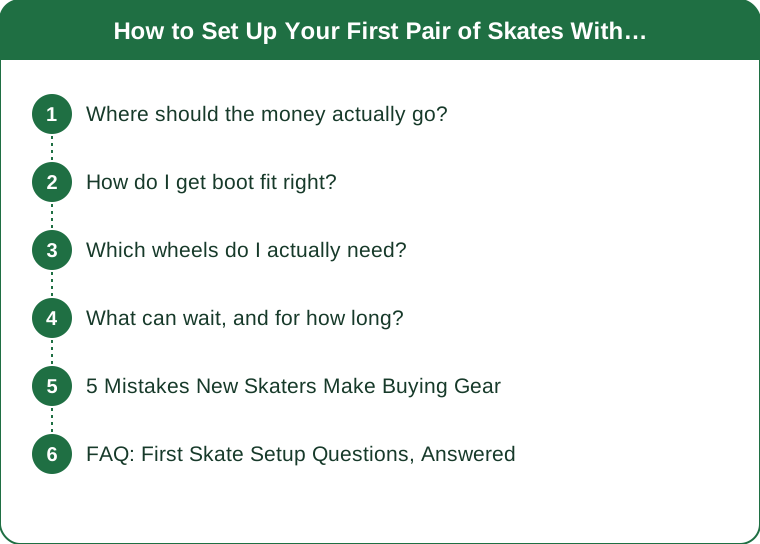
Where should the money actually go?
The boot, first and by a distance. It is the interface between you and everything else, it decides comfort over hours, and it is the component you cannot meaningfully improve with a small upgrade later.
A boot that fits properly makes a modest setup feel good. A boot that does not fit makes an expensive setup feel awful, every single time.
Wheels second, because wheel hardness is the difference between skating being smooth or being a vibrating, sliding fight - and beginner packages often ship with the wrong ones for outdoor use.
Protective gear third, which most people rank last or omit, and which changes willingness to practise more than any performance component.
Bearings fourth. The difference between mid-range and premium bearings is real but is not what limits a beginner.
Plates and toe stops last. They matter later, when your skating is developed enough to notice.
How do I get boot fit right?
Skate sizing is not street sizing and varies substantially between brands. Measure your foot in centimetres and use the brand’s own size chart every time.
Measure at the end of the day, when feet are at their largest, and measure both feet - most people have a difference.
A skate boot should be snug, with toes just brushing the end when standing and pulling back slightly when you bend your knees. Loose is worse than slightly tight.
Heel lock is the thing to test. Lace up, bend your knees, and check whether your heel lifts. Heel lift is the primary cause of blisters and of poor control.
Expect a break-in period, especially in leather boots, and expect the fit to change over the first ten sessions.
And wear the socks you will actually skate in when you try them, because sock thickness genuinely changes the size you need.
Which wheels do I actually need?
Wheel hardness is measured on the durometer scale, written as a number followed by A. Lower numbers are softer.
Outdoor skating needs softer wheels, typically in the 78A to 85A range, because soft wheels absorb rough surface vibration and grip.
Indoor rink skating uses harder wheels, typically 88A and up, because rink floors are smooth and harder wheels roll faster and slide predictably.
Most beginner packages ship with hard wheels, because they are cheaper and because packages are designed around rink use - which is why so many first outdoor sessions feel terrifying.
If you are skating outdoors and your skates came with hard wheels, changing them is the highest-value upgrade available and it costs a fraction of a new setup.
Wheel size affects speed and stability too, with larger wheels rolling faster and smaller wheels turning more easily, but hardness is the variable to get right first.

What can wait, and for how long?
Bearings can wait a season. Standard bearings that come with a decent setup are fine while you are learning, and the difference is most noticeable at speeds beginners do not reach.
Toe stops can wait until you know your stopping style. Adjustable toe stops are worth having; upgrading the material is a preference thing that develops with experience.
Plates can wait a long time - typically until you know what discipline you are pursuing, since park, derby, rhythm and outdoor cruising want different things.
Cushions are a cheap early tweak, and softer cushions make turning easier for lighter skaters, which is worth knowing because it is a small cost with a real effect.
Laces and toe caps are consumables and worth replacing when they wear out rather than upgrading early.
And do not buy a second pair of skates in the first six months. Your preferences will change more than you expect.
5 Mistakes New Skaters Make Buying Gear
1. Buying to street shoe size. Skate brands size differently and often smaller. Measure in centimetres, use the brand chart, and ignore what your trainers say.
2. Skating outdoors on rink wheels. The single most common cause of a miserable first month. Hard wheels on rough tarmac transmit every vibration and slip on grit. Soft wheels fix it for the price of a takeaway.
3. Skipping wrist guards. Wrist injuries are among the most common in skating, and the falls that cause them happen most in the first weeks. Wrist guards are the cheapest and highest-value protective item.
4. Over-tightening the trucks on day one. Beginners often tighten everything for stability, which makes turning much harder and skating less responsive. Start moderate and adjust after a few sessions.
5. Buying the aesthetic first. The prettiest skate at the price point is frequently the one with the softest boot support and the hardest wheels. Buy the fit and the wheels, then care about colour.
And the frequent bonus mistake: no helmet outdoors. Falling backwards is common while learning and the back of the head is the worst thing to land on. A helmet is not optional outdoors.
FAQ: First Skate Setup Questions, Answered
How much should a first setup cost?
A usable, comfortable beginner setup with appropriate wheels and full protective gear is achievable well below what a high-end boot alone costs. Spend the bulk on the boot and the wheels.
Quad skates or inline for a beginner?
Both are learnable. Quads offer more lateral stability and are common for rink, rhythm and derby; inlines roll faster and suit distance and outdoor cruising. Pick by what you want to do, not by which is easier.
Can I change wheels myself?
Yes - it needs one skate tool and about fifteen minutes, and it is the first maintenance task worth learning. Bearings transfer between wheels with a little practice.
How do I know if my boots are too big?
Heel lift when you bend your knees, sliding forward on stopping, and blisters on the back of the heel. A boot that is too big feels comfortable standing still and unstable moving.
Do I need different wheels for autumn?
Not different hardness, but be aware that cooler surfaces and damp leaves change grip substantially. Wet surfaces are the main hazard as the season turns, and no wheel makes wet tarmac safe.
What protective gear do I actually need?
Wrist guards at minimum, then knee pads, then a helmet for outdoor skating - and a helmet is not really optional outdoors. Elbow pads are worth it once you start falling in new ways.
TL;DR:
- Spend on the boot first - it decides comfort and control and cannot be upgraded cheaply.
- Wheels second: 78A to 85A for outdoors, harder for rinks. Most beginner packages ship with rink wheels.
- Protective gear is the component people skip and the one that keeps month one enjoyable.
- Bearings, toe stops and plates can all wait a season or more.
- Measure your feet in centimetres and use the brand’s own chart, not your shoe size.
- Do not over-tighten trucks on day one - it makes learning to turn harder.
Get the boot and the wheels right and everything else is a preference you will develop later.
Keep Reading
This article is for general informational and styling purposes only. Fit, sizing, and product availability may vary.